
Paying property tax in Ohio is a county-level process, so the exact payment instructions, available payment methods, and local deadlines can vary depending on where your property is located. In most cases, property owners pay their real estate taxes through the county treasurer, while the county auditor maintains important property and tax assessment records.
Before making a payment, it helps to know your parcel number, review your current tax bill, confirm the amount due, and check the latest deadline published by your county. You can also use the Ohio Tax Calculator to understand how property value, tax rates, and local levies can affect your estimated tax bill.
This guide explains how Ohio property tax payments work, what information you need, common payment methods, what happens when a payment is late, and how to find the right county office for your property.
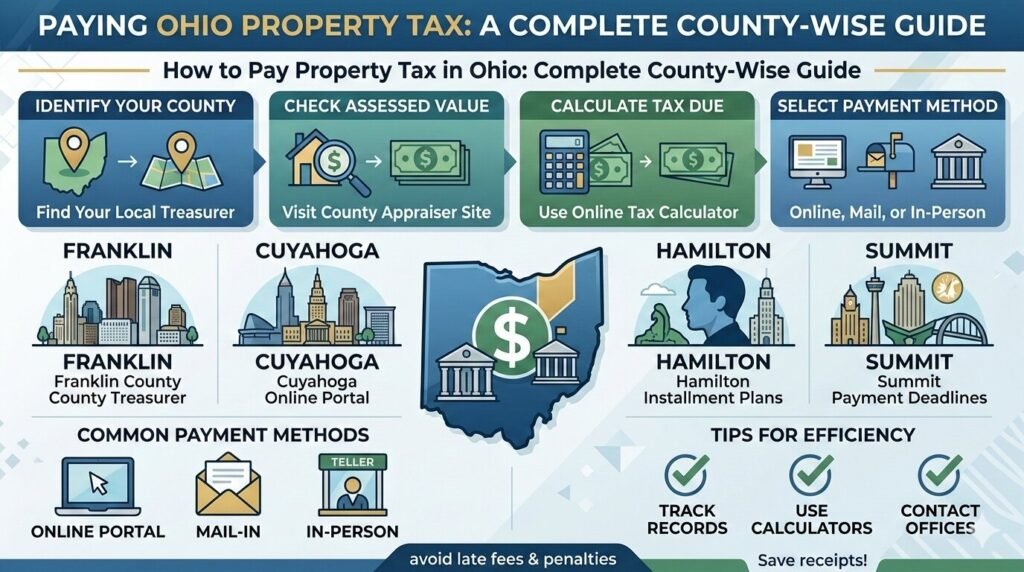
How Ohio Property Tax Payments Work
Ohio real property taxes are collected at the county level. The money collected through property taxes supports a range of local services, including schools, libraries, public safety, county government, and other taxing districts.
Ohio law establishes a standard payment schedule for real property taxes. A taxpayer generally pays either the full amount by December 31 or one-half of the current taxes by December 31 and the remaining half by June 20. Counties can receive extensions under state law, so you should always verify the actual deadline shown on your tax bill or published by your county treasurer.
Important: Ohio does not have one single payment portal or one universal local deadline that applies identically to every property owner. Your county treasurer is the office to check when you need the exact amount due, payment instructions, or information about a delinquent balance.
What You Need Before Paying Your Property Tax
Having the right information makes the payment process much easier. Before visiting a county payment portal or mailing a check, gather the following:
- Property address
- Parcel number or permanent parcel number
- Current property tax bill
- Amount currently due
- County where the property is located
- Preferred payment method
- Any delinquent tax balance, if applicable
Your parcel number is particularly useful because it identifies the specific property associated with the tax account. If you are unsure where to find it, check your tax bill or the property search system maintained by your county auditor.
You can also start with the Ohio property tax calculator to estimate property taxes, but an online estimate should not be treated as the final amount owed. Your official tax bill and county records control the actual liability.
Step-by-Step: How to Pay Property Tax in Ohio
The process is straightforward once you know which county handles your property. Follow these steps before submitting your payment.
Identify Your County
Determine the Ohio county where the property is located. The county matters because property tax records and payments are administered locally.
Find Your Parcel Number
Your parcel number connects your property to its county tax record. It is normally printed on your tax bill and can often be found through the county auditor’s property search.
Review Your Tax Bill
Check the taxable value, current taxes, credits, previous payments, delinquent amounts, and the balance currently due.
Confirm the Deadline
Check the date printed on your tax bill and the latest notice from your county treasurer rather than relying only on a general statewide date.
Choose a Payment Method
Depending on the county, you may be able to pay online, by mail, in person, or through another locally supported payment option.
Save Your Confirmation
Keep your online confirmation, receipt, canceled check, or other proof of payment for your records.
How to Pay Ohio Property Tax Online
Online payment is often the most convenient option when your county provides an electronic payment portal.
- Open your county treasurer’s official tax-payment website.
- Search for your property using the parcel number or other requested information.
- Review the tax balance and payment period.
- Select the available payment method.
- Submit the payment.
- Save or print the confirmation.
Some online payment systems charge a processing fee depending on the payment method. Review the fee information before completing the transaction.
Tip: Make sure you are using the official county website. Third-party property websites can provide useful information, but they are not necessarily the government office responsible for accepting your tax payment.
Paying Ohio Property Tax by Mail
If you prefer to pay by mail, follow the mailing instructions printed on your tax bill or provided by the county treasurer.
- Write the correct parcel number on the payment if instructed.
- Use the county treasurer’s current mailing address.
- Confirm the payment amount before mailing.
- Allow enough time for delivery.
- Keep a copy of the check and payment documents.
- Consider using a mailing service that provides tracking when appropriate.
Ohio law also addresses when mailed payments are considered timely. Under certain circumstances, a payment received after the deadline can still be treated as timely when the envelope carries a qualifying U.S. Postal Service postmark on or before the payment date.
Paying Property Tax in Person
County treasurers may also accept property tax payments at their offices. If you plan to pay in person, take your current tax bill or parcel information with you.
Check the county treasurer’s website for office hours, accepted payment types, and local instructions before visiting. In-person payment can be useful when you need help understanding a balance, have a question about a delinquent account, or need a receipt directly from the county office.
County-Wise Ohio Property Tax Payment Information
The basic payment process is similar throughout Ohio, but each county manages its own tax accounts and payment procedures. The following sections highlight what property owners should check in some of Ohio’s larger counties.
Franklin County Property Tax
Franklin County property owners should use the county treasurer’s official resources to check their current balance, payment deadline, and available payment options.
Before making a payment, have your parcel number or tax bill available. For an estimate based on property value, use the Franklin County Property Tax Calculator.
The calculator can help estimate the potential annual tax burden, while the official county tax record should be used to determine the exact amount currently due.
Cuyahoga County Property Tax
Cuyahoga County property owners should review their property tax information through the county’s official resources and follow the treasurer’s payment instructions.
Your parcel information can help ensure that you are paying the correct account. For an estimate based on property value, use the Cuyahoga County Property Tax Calculator.
When checking the amount due, pay attention to the tax period and any outstanding balance instead of relying only on an estimated annual amount.
Hamilton County Property Tax
Hamilton County property owners can review their property tax information through the county’s official resources and follow the treasurer’s instructions for payment.
Verify the parcel information, amount due, and applicable deadline before submitting payment. If you are comparing potential property costs, use the Hamilton County Property Tax Calculator.
An estimate is not a substitute for the official tax bill because the final amount depends on taxable value, local taxes, credits, and applicable levies.
Summit County Property Tax
Summit County property owners should verify their tax balance and payment instructions through the county’s official treasurer resources.
Keep your parcel number and current tax bill available when checking the account. For an estimate, use the Summit County Property Tax Calculator.
If the account shows a delinquent balance, review the county’s instructions carefully before making a partial or current-year payment.
What Happens If You Miss an Ohio Property Tax Deadline?
Missing a property tax deadline can result in a penalty and can cause the unpaid amount to become delinquent.
Under Ohio Revised Code Section 323.121, a 10% penalty generally applies to an unpaid first-half or second-half real property tax payment when it is not paid by the applicable deadline, subject to the statutory rules and extensions. The law also provides a limited penalty waiver when qualifying payments are made within 10 days after the deadline.
If taxes remain unpaid, the situation can become more serious. Ohio law provides procedures for delinquent taxes, including placing delinquent taxes on the delinquent land list and duplicate when statutory conditions are met.
If you have missed a deadline, contact the county treasurer instead of ignoring the balance. The treasurer can provide the current amount due and explain the available options for your specific tax account.
Can You Make a Partial Property Tax Payment?
Ohio law allows a county treasurer to accept partial payments of property taxes. However, the treatment of an unpaid balance depends on the circumstances and applicable law.
A partial payment does not automatically eliminate penalties or make an account current. If you are dealing with delinquent taxes, confirm with the county treasurer how your payment will be applied before sending less than the full amount due.
Property Tax Credits and Reductions in Ohio
Your final property tax bill can be affected by credits, exemptions, and reductions provided under Ohio law. These provisions can change the amount that a qualifying property owner ultimately pays.
Homestead Exemption
The homestead exemption can reduce the property tax burden for qualifying homeowners. Eligibility and application requirements are governed by Ohio law, so homeowners should check the current requirements with their county auditor.
Owner-Occupied Reduction
Ohio has property tax reductions associated with qualifying owner-occupied residences. These reductions are reflected in the tax calculation rather than simply being a discount applied when the payment is submitted.
Tax Credits and Reductions
Ohio’s property tax system includes additional statutory credits and reductions. Your tax bill therefore depends on more than the property’s market value alone.
Check With the County Auditor
If you believe an exemption or credit is missing from your bill, contact your county auditor’s office before assuming that the tax bill is incorrect.
How to Keep Track of Property Tax Payments
Keeping good records is one of the easiest ways to avoid confusion later. Create a simple folder for your property tax documents and keep your payment history organized.
- Current and previous tax bills
- Online payment confirmations
- Receipts
- Canceled checks
- County correspondence
- Exemption or credit documentation
- Records of delinquent balances and payment arrangements
If you own several properties, keep a separate record for each parcel. Mixing parcel numbers or tax accounts can create unnecessary confusion.
Common Mistakes to Avoid
Frequently Asked Questions
How do I find out how much property tax I owe in Ohio?
Start with your county auditor or treasurer’s property tax records. Your official tax bill provides the amount currently charged and the applicable payment information. You can also use the Ohio Tax Calculator to estimate property taxes before reviewing the official bill.
When are Ohio property taxes due?
Under the standard statutory schedule, real property taxes are generally due in two installments, with December 31 used for the first payment and June 20 for the second payment. Counties may receive extensions, so verify the actual deadline for your property with the county treasurer.
Can I pay my Ohio property taxes online?
Many Ohio counties provide online payment systems. Available payment methods and processing fees depend on the county. Use the official county treasurer’s website to access the correct payment system.
Who collects property taxes in Ohio?
Property taxes are collected by the county treasurer. The county auditor plays an important role in maintaining property and tax assessment records and preparing the tax duplicate used for collection.
What happens if I pay my Ohio property taxes late?
A late real property tax payment can result in a penalty. Ohio law generally provides a 10% penalty on qualifying unpaid installments, with specific provisions concerning payments made shortly after the deadline.
Can I pay delinquent property taxes separately from current taxes?
Ohio law contains provisions allowing delinquent taxes to be paid under certain circumstances without simultaneously paying all current taxes. Because the exact amount and account status matter, contact the county treasurer for instructions on your specific account.
Where can I find my property parcel number?
Your parcel number is usually listed on your property tax bill and can often be found through your county auditor’s property search system. Use the parcel number when checking your account or contacting the county treasurer.
Can a property tax calculator tell me the exact amount I need to pay?
No. A calculator can provide an estimate based on the information entered, but the official county tax record determines the actual amount due. Local levies, taxable value, credits, exemptions, and other factors can affect the final bill.
Final Thoughts
Paying property tax in Ohio becomes much easier when you separate the estimate, the official tax bill, and the payment process.
Use a property tax calculator when you want to understand the potential cost of owning a property. When it is time to make a payment, rely on the official records and instructions from the county treasurer. Check the payment deadline, confirm the correct parcel number, review any credits or delinquent amounts, and keep proof of payment after the transaction is complete.
Whether you are paying property tax in Franklin, Cuyahoga, Hamilton, Summit, or another Ohio county, taking a few minutes to verify the official information before paying can help you avoid unnecessary penalties and payment errors.